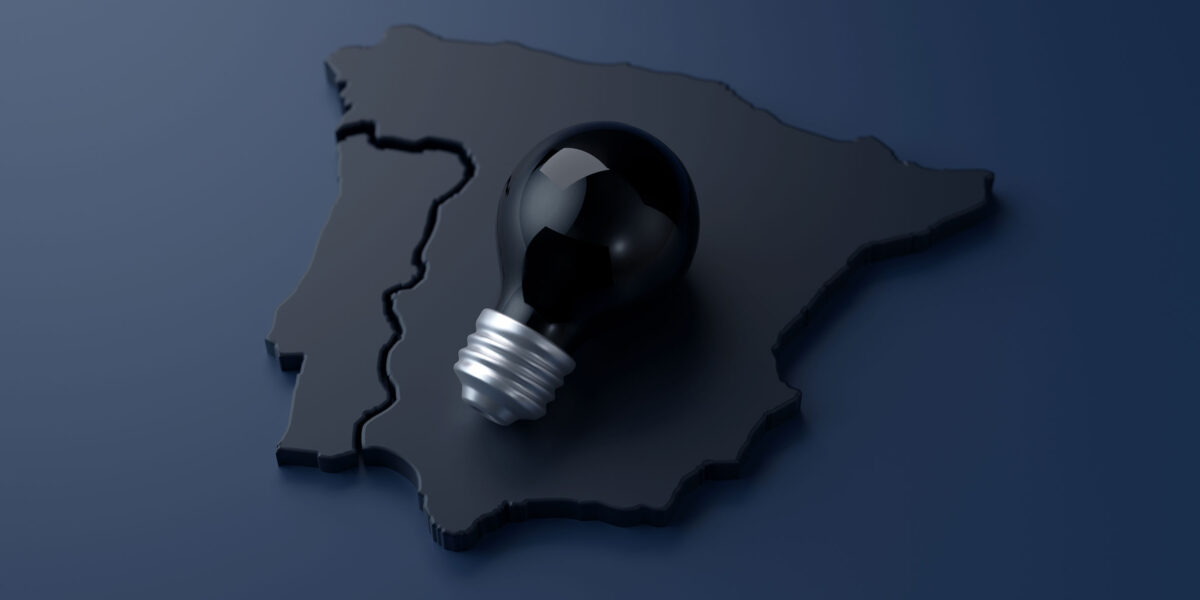
The whole of Spain and Portugal, and parts of France, experienced a massive blackout on 28 April. Traffic lights, buildings and services went dark, leaving millions of people without electricity for 12–16 hours.
“Although 12 hours without electricity may seem like a very long time for consumers, dealing with such a major power outage in less than 24 hours was actually a rapid response,” says Antti-Juhani Nikkilä, Senior Expert at Fingrid.
The ultimate cause of the disruption remains unclear. The fact that the fault originated in the distribution system rather than the transmission system is slowing down the investigation.
However, the investigation has revealed that a sudden increase in the electricity network’s voltage level led to the sudden disconnection of electricity production and consumption. This in turn led to the disconnection of the Iberian Peninsula’s electricity system from the rest of the European system. An extraordinary sequence of events lasting only a few minutes quickly brought the system down.
Electricity systems have evolved over the decades to meet local needs, which means that these systems usually vary slightly between countries.
Unlike in Spain, almost all grid-connected power generating facilities in Finland, with the exception of small domestic units, are required to participate in continuous voltage regulation.
“The Finnish electricity system’s operating procedures appear to protect us from a disruption like the one that occurred in the Iberian Peninsula. For example, unlike in Spain, almost all grid-connected power generating facilities in Finland, with the exception of small domestic units, are required to participate in continuous voltage regulation. This protects the electricity system from rapid voltage surges.”
Although a comparable major disruption is unlikely in Finland, Nikkilä notes that no system is completely reliable. That’s why consumers should also have a home emergency supply kit that includes food, drink and a battery-powered radio.
What lessons did we learn?
European-level cooperation takes place through ENTSO-E, the European Network of Transmission System Operators for Electricity. The first report on the blackout was ready in October 2025, and another report on recommended measures will be published later in 2026.
Nikkilä believes that more attention should be paid to international information exchanges and transparency surrounding the electricity system’s functionality.
“We’re learning that important things can also happen outside the main grid. We must be able to obtain all of the information quickly for analysis.”
Nikkilä says that another lesson learned was that voltage surges can happen very quickly – sometimes in only a few minutes – and automation will play a key role in managing them.