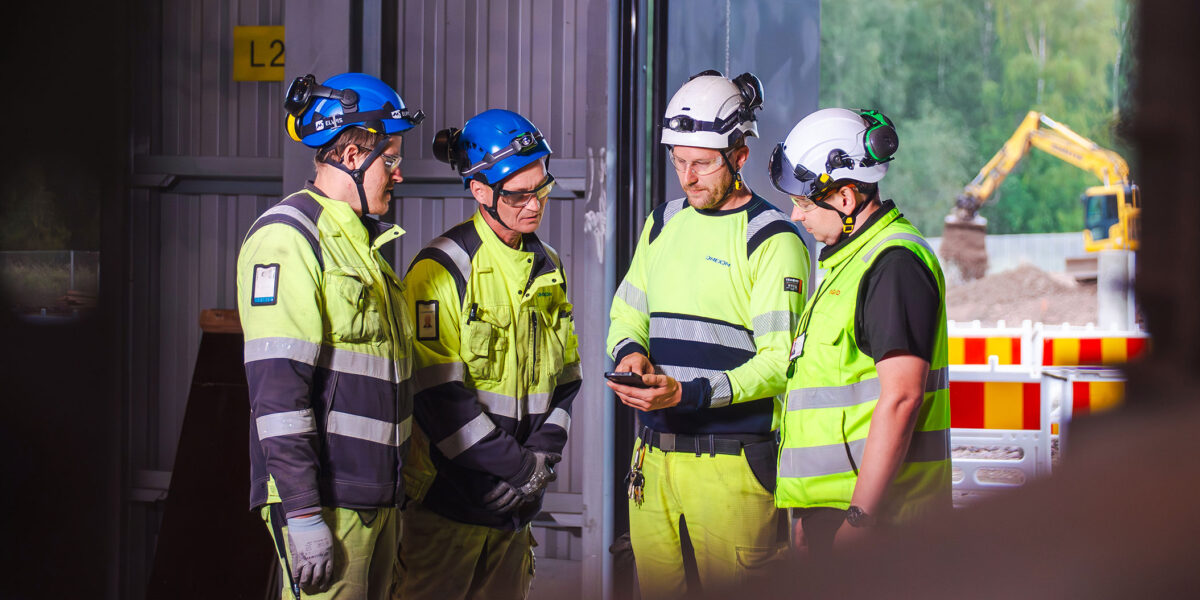
Omexom is responsible for the maintenance of Fingrid’s substations in Southern Finland and Northern Ostrobothnia. At Fingrid’s Main Grid Day last spring, Omexom was awarded the Occupational Safety Award, with the citation highlighting the company’s exceptional commitment to safety.
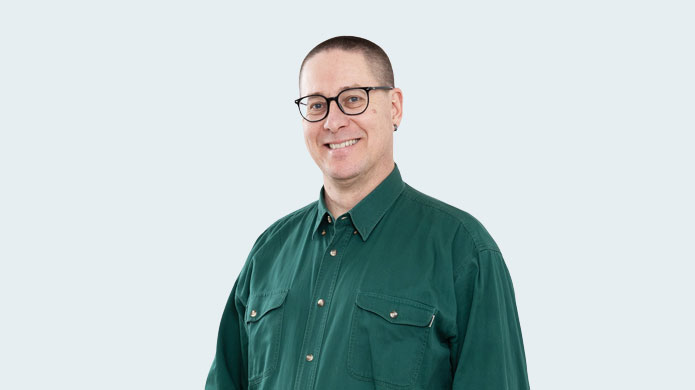
“We ensure worksite safety by discussing it on a daily basis, holding regular safety check-ins, conducting risk assessments and openly raising safety issues as part of the everyday operation,” says Mika Kärkkäinen, Site Manager, Uusimaa Region at Omexom.
Risks must be spotted, whether they are on your own worksite or on someone else’s.
In addition to considering the risks associated with one’s own work, Kärkkäinen emphasises the importance of paying constant attention to surrounding operations and intervening in coworkers’ activities. Safety also involves monitoring the work of others.
“Risks must be spotted, whether they are on your own worksite or on someone else’s. All deviations are discussed in unit meetings. Once a month, we organise a safety meeting for all of the company’s employees to discuss any accidents and near-misses that have occurred as well as positive safety actions taken at our worksites.”
Kärkkäinen says that at Omexom, commitment to safety starts already at recruitment. From the outset, it is stressed that ensuring safety is an essential part of the job, as substation maintenance involves risks.
“Safe performance of work is an important part of our expertise and assignment; hazardous performance is not on the client’s order,” Kärkkäinen stresses.
Working with electricity always poses a variety of risks in the workplace, which increases the importance of communication and interaction between teams.
“As seasons change, so do the conditions at substations and on commutes. For example, slippery conditions pose particular risks in winter.”
Clear guidelines and continuous improvement
The maintenance of Fingrid substations is strictly regulated and controlled work, where safety is a top priority.
Clear contractual requirements, detailed instructions and close cooperation with service providers such as Omexom help ensure that most accidents and near-misses are avoided at worksites.
Prior to starting work, each service provider must draw up a safety plan that specifies the most important occupational safety regulations.
“We review the plan and, if necessary, provide comments on it before the work can commence,” says Timo Heiskanen, Manager, Maintenance Management at Fingrid.
Safety guidelines drawn up by service providers cover issues such as working in confined spaces or at heights, and they are updated as necessary.
“A couple of years ago, we clarified the requirements for work in confined spaces at substations,” says Heiskanen.
Sites such as transformer shielding pools and wells require an assigned rescue team, which should include at least a hatch guard. In addition to the hatch guard, Heiskanen says it is also advisable to appoint a rescuer.
Cooperation with service providers
Safety requirements are developed jointly with service providers within an occupational safety team that shares experiences and discusses risks that have materialised at Fingrid worksites. Accidents and near-misses are also investigated collaboratively.
According to Heiskanen, the safety level of substation maintenance is good – although there is always room for improvement.
“On average, we have zero to two accidents per year. We have gotten off lightly with electrical accidents, and the rest have been isolated slips of the knife,” Heiskanen describes.
According to Heiskanen, guidelines are of a high standard on both the client and service provider sides, and they are constantly improved. However, it is imperative to continue ensuring that employees read and follow the guidelines at worksites.
“Many accidents and near-misses could have been avoided if the instructions had been followed,” Heiskanen stresses.
Slippery conditions, high traffic and rush increase risks
In the coming months, particular attention must be paid to slip prevention, as the varying winter conditions increase the risk of slipping.
Many accidents and near-misses are partly caused by haste.
Hazardous traffic incidents have also become more frequent due to the higher number of maintenance sites and increased traffic. In addition, electrical accidents are showing a slight upward trend.
“I have a feeling that many accidents and near-misses are partly caused by haste,” says Heiskanen.
Kärkkäinen, too, has noticed that worksites have seemed somewhat hectic and hurried of late, but he points out that haste should not affect occupational safety.
“I’ve told employees that if pressure starts to build, they need to take a breath to ensure the job gets done safely,” he says.