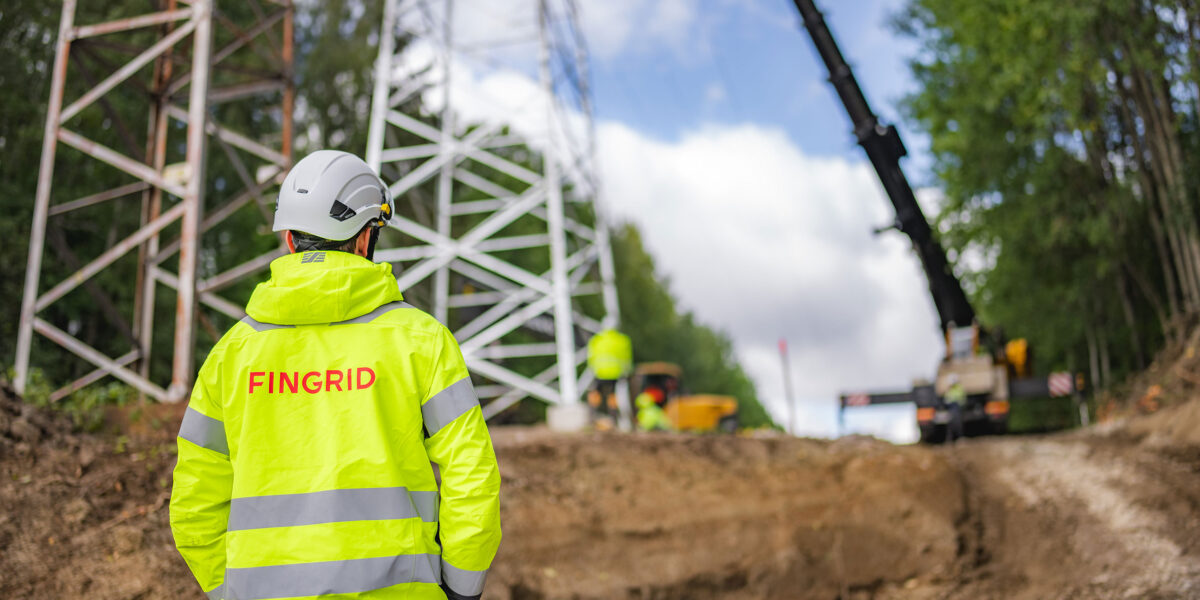
Fingrid has long carried out proactive and determined work for occupational safety, as an example of which the company has participated in the Vision Zero Forum for more than ten years.
The work has been highly successful, as indicated by the highest occupational safety level classification granted to Fingrid by the Forum last spring.
“We decided to apply for a level classification for the first time because we had extended our occupational safety management system to the entire personnel. Occupational safety requires everyone’s commitment, and its promotion must be proactive,” says Karri Koskinen, Occupational Safety and Health Manager at Fingrid.
Fingrid did not have any occupational accidents leading to absence in 2024. However, Fingrid’s service providers had a number of accidents on worksites, and the promotion of occupational safety will continue through close cooperation with the company’s service providers.
Positive safety observations
Safety observations are an essential part of proactive occupational safety work. They can also be positive, such as tips on good practices.
Good practices need to be adopted and shared with others.
According to Maija-Leena Merivirta, Senior Specialist at the Finnish Institute of Occupational Health, it may sometimes be difficult for employees to perceive what practically constitutes an observation. If this is the case, it is advisable to practise making and reporting observations together.
“Excellent observations should be praised publicly, as it’s important that the employee feels heard. Good practices need to be adopted and shared with others,” Merivirta explains.
Part of everyday operation
Workplaces with a strong occupational safety culture, such as Fingrid, differ from others in that they integrate safety into everyday operation, making everyone responsible for it.
How can you tell whether occupational safety is integrated into the company culture?
Tiina-Mari Monni, Director of the Vision Zero Forum, has a suggestion.
“Try to think whether you adhere to all safety instructions even if no one is around to see. If you do and so do your colleagues, it’s a sign of occupational safety having been internalised,” Monni sums up.
Mental load highlighted
When pursuing a strong occupational safety culture, mental aspects become increasingly important. Everyone can surely find a fitting helmet for physical safety, but the mental side of safety is more complex.
“You don’t always need to hire an external consultant to solve problems. Employees themselves are often the best experts on their work, so it’s a good idea to have the team discuss their work and seek solutions to stressful matters together,” Monni advises.
The Mental Health Toolkit provides tools for building a working culture that supports mental wellbeing. The Toolkit is available on the website of the Finnish Institute of Occupational Health.