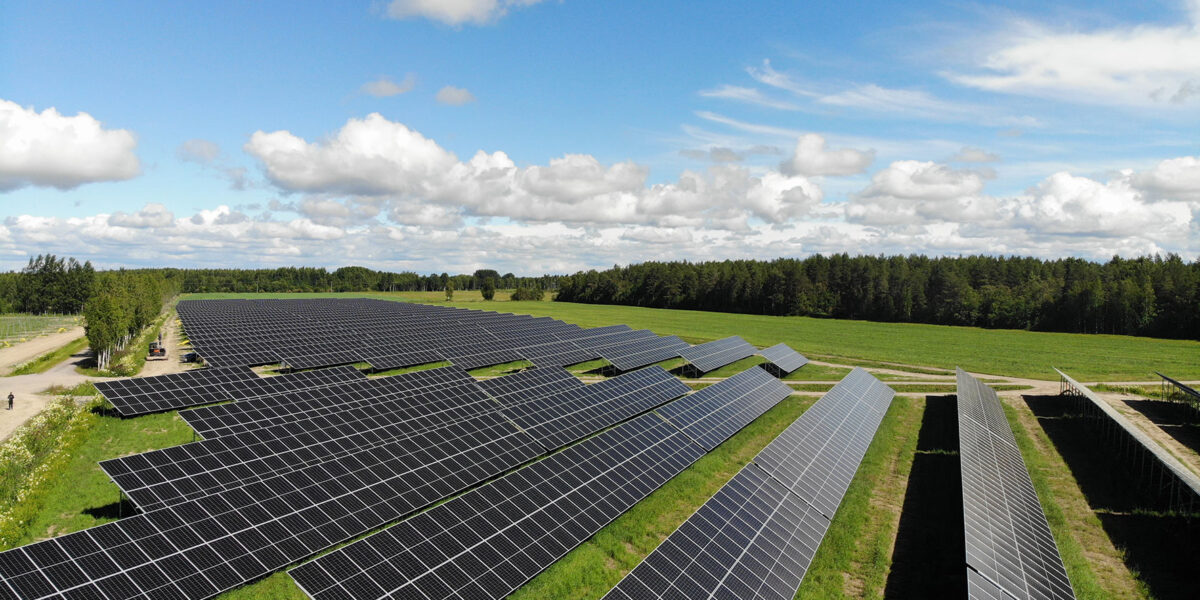
Today, 1,500 megawatts of solar power is produced in Finland. Less than a third of this is produced in industrial-scale solar parks directly connected to the grid.
Smaller solar power plants of less than 1 MW are usually connected to the distribution network.
The smallest solar power plants produce energy for individual households or farms, while the largest ones sell electricity to large industrial or municipal energy consumers and to the electricity exchange. Modularity and scalability are therefore advantages of solar power.
“At the moment up to 26,000 megawatts of solar power plants are being planned for Finland, but most of these will not be built.”
”At the moment, Renewables Finland estimates that up to 26,000 megawatts of solar power plants are being planned for Finland, but most of these will not be built. If even 10 per cent of that is realised, that is still a lot,” says Edvard Lukka, Specialist at Fingrid.
”Reliable production forecasts from solar energy producers are important to us, because we must ensure the power balance of the electricity system. Wind and solar power plants support each other well,” he continues.
However, electricity price forecasts have fallen in Finland, which reduces the profitability of production. The biggest solar boom was about three years ago.
”It was a real gold rush. Now we are in a more realistic phase, where only the best projects and companies will survive. Growth is more controlled and projects are of higher quality. Finland needs suitable power purchase and financing agreements and new investments that increase consumption, such as data centres,” says Santeri Ahokas, Executive Vice President of Skarta Energy.
Founded in 2021, Skarta is currently the largest solar energy producer in Finland and the owner of Finland’s largest 107 MWp solar power plant in Utajärvi.
The company develops solar power projects both for its own power production and for sale to others. Its customers are industrial energy consumers and investors, and the company specialises in projects over 50 MWp.
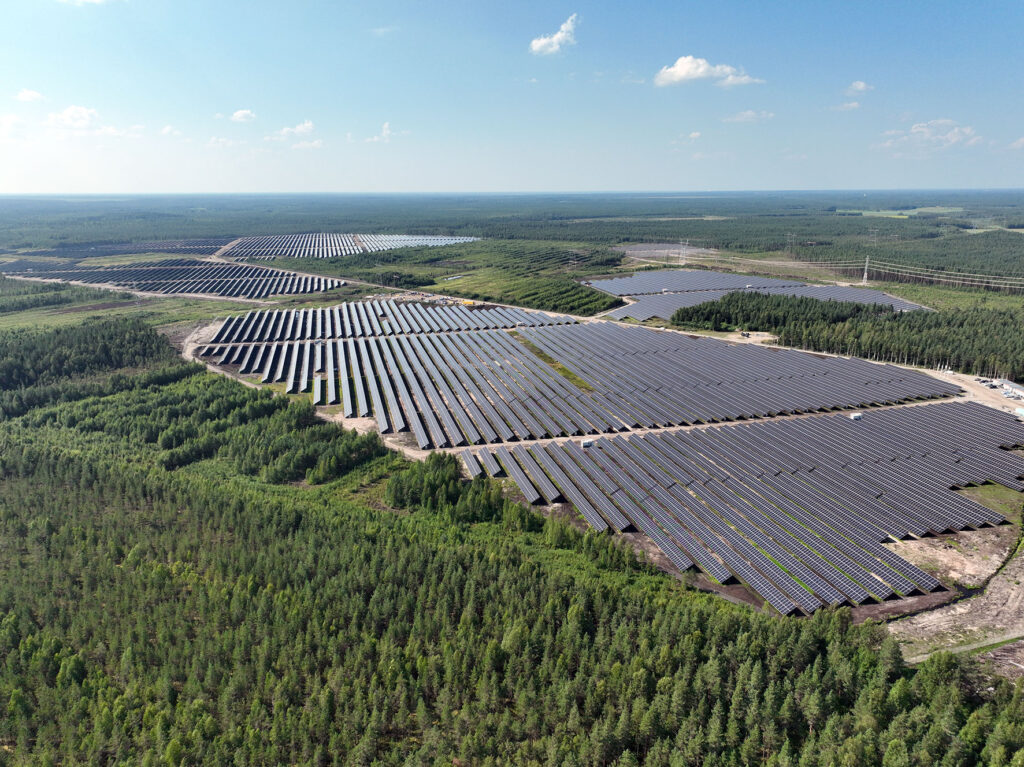
Getting rid of coal cheaply
In ten years, the efficiency of solar panels has more than doubled.
”The pricing of the panels is also affected by geopolitical factors, as the panels and components are manufactured in China. However, solar power is the cheapest form of electricity generation of all,” says Ahokas.
Alight, which is an international solar energy developer and independent power producer originally from Sweden, enters into long-term contracts with industrial energy consumers.
Its largest solar park in Finland, 100 MWp, is under construction in Eurajoki.
”We are currently planning 1 gigawatt worth of solar parks in Finland. Our customers range from the clothing company H&M to banks and automotive companies. For our customers, price is the primary reason to switch to solar power, but reducing carbon emissions is also a strong motivator,” says Alexander Rudberg, Alight’s Development Director.
Permit processes vary across the country
Founded a year ago, Finnish Solar Power was set up by energy companies to produce electricity for its owners. It has solar power plants under development in various parts of the country.
”Getting a permit can be very different depending on the municipality. As solar energy production is new, the criteria for obtaining a permit are being refined all the time. This is, of course, necessary, but sometimes, it causes extra work for us as applicants,” says Jukka Kaarre, CEO of Finnish Solar Power.
A solar power plant typically takes 1–3 years from design to implementation. Solar companies are concerned about a new zoning law, which would require zoning for power plants larger than 50 hectares. This would significantly slow down the construction of solar power. The industry is trying to influence the drafting of the law.
“Solar power plants are quick to build compared to other forms of energy.”
”Despite all this, solar power plants are quick to build compared to other forms of energy,” says Kaarre.
A nearby nature reserve or settlement will affect the permitting process, but will not necessarily prevent construction. There is no need to leave a buffer zone around a solar power plant. An appropriate distance to the grid connection point is also important when deciding on construction.
Many landowners are very interested in leasing their land for solar power plants.
”Every week, we hear from many landowners who are interested in decades-long leases. A project of about 10 megawatts can fit on about 15 hectares, but a project over 80 megawatts requires about 100 hectares of land,” says Kaarre.
Smooth cooperation
Representatives of solar companies thank Fingrid for its interest in energy producers, fast decision-making, digital tools and transparency.
Alight works with many of the Nordic transmission system operators, and in Rudberg’s experience, cooperation with Fingrid is very good.
”The transparency of Fingrid’s operations gives us significant benefits. Its public capacity maps clearly show where projects should be planned. At Fingrid, the key account manager has the autonomy to make decisions with the customer, and the attitude towards customers is positive,” says Rudberg.