Fingrid’s Planning Manager Olli-Pekka Janhunen says that the grid code specifications for grid energy storage systems (SJV2024), which were updated in 2024, require new grid energy storage systems using battery technology to coordinate closely with the grid.
“The key new requirement is that grid energy storage systems must have grid-forming capabilities. They must be able to respond to voltage and frequency fluctuations near instantaneously and independently.”
The change comes in response to the increase in converter-connected production, such as solar and wind power plants, and the decline in fossil-fuel plants, such as coal and gas power plants.
The electricity grid now has fewer traditional power plants based on rotating machines, which creates the grid’s voltage and frequency.
“The idea is that grid energy storage facilities will help to keep the electricity system balanced in all circumstances.”
Fingrid helped interpret the criteria
Finland’s first grid energy storage facility capable of balancing the grid’s voltage and frequency was opened in Valkeakoski last autumn. The grid energy storage facility was supplied by Merus Power and has a capacity of 30 megawatts.
The Finnish listed company supplies filters and compensators for ensuring the quality of electricity, as well as turnkey grid energy storage facilities.
Sales & Marketing Director Markus Ovaskainen says that the company did not have a ready-made product that would meet the new grid code specifications at the time when they were published.
“The Power Conversion System was programmed to behave as if it were a traditional power plant with a rotating generator.”
“We set out to create a new type of software and control technology for the Power Conversion System in the grid energy storage system. Fingrid provided us with a great deal of assistance in clarifying what the levels and criteria actually mean in practice. The Power Conversion System was programmed to behave as if it were a traditional power plant with a rotating generator,” Ovaskainen explains.
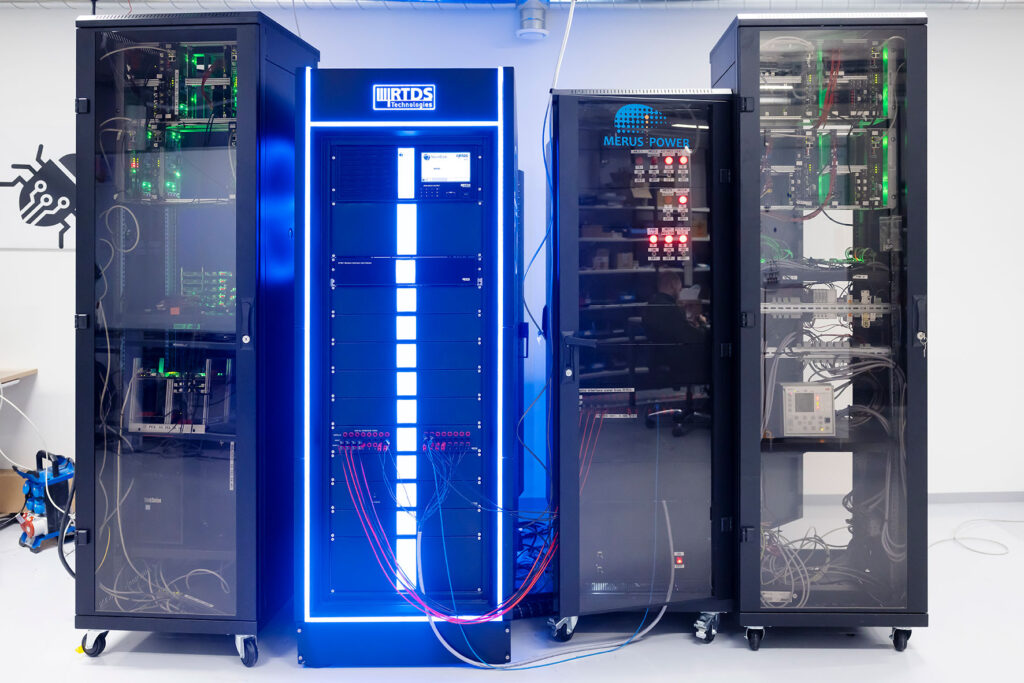
Power Conversion System consists of converters, power electronics devices that essentially charge and discharge a battery. The project, which required the efforts of several people, took a couple of years, after which the system’s compliance with the criteria wasverified through modelling. A new verification was performed during commissioning.
“Fingrid also requires other new grid energy storage facilities connecting to the main grid to undergo similar modelling and verification,” says Joona Mörsky, Power Plant Specialist at Fingrid.
Capability does not consume battery capacity
Ovaskainen says that the new capabilities will not increase the operating costs of the grid energy storage system.
“The grid energy storage facility contributes to frequency maintenance at all times, but because Finland’s electricity network is strong and stable, only minor adjustments with negligible use of the batteries are required. They do not stress the batteries excessively or shorten their lifespan.”
When many bear a load, the burden on the individual is smaller:
“When procuring a grid energy storage facility, it is advisable to ensure that the supplier is capable of equipping it with the required control system and can demonstrate that they have been able to do so in the past.”
Grid energy storage facilities are of interest
Fingrid has received numerous enquiries about grid energy storage facilities.
“When a customer wants to build a grid energy storage facility, we help them interpret the SJV2024 criteria. We also advise on the type of modelling we require,” says Mörsky.
He adds that the new requirements do not apply to old grid energy storage facilities that are already connected to the grid.
Ovaskainen says that once Merus Power had laid the groundwork with the Valkeakoski project, it was easier for the company to get involved in subsequent projects. The company has also delivered a grid energy storage facility with the new capabilities in Mertaniemi in Lappeenranta, and two other projects are in the works.
Elsewhere in Europe, transmission system operators do not yet require grid energy storage facilities to have grid-forming capabilities.
According to Ovaskainen, it is also easier to export technology when the bar has already been set high in Finland.
“In addition to Finland, there are already several grid energy storage systems with grid-forming capabilities in Australia and the UK, for example,” says Janhunen.
Elsewhere in Europe, transmission system operators do not yet require grid energy storage facilities to have grid-forming capabilities.
“Finland adopted the new requirements because there is a lot of wind power here,” says Mörsky.