The site in Huutokoski, Joroinen, is now able to provide more rapid disturbance reserves than before, as a new reserve power plant has been built in the area, albeit using old turbines.
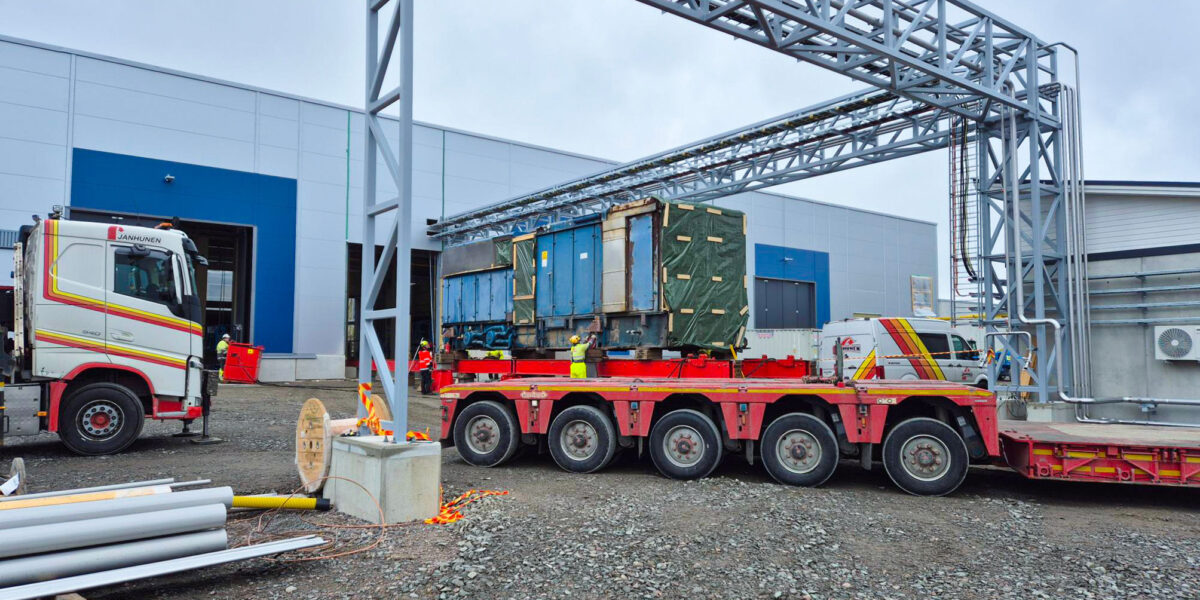
The project involved moving two Frame 5 gas turbines from Tahkoluoto in Pori and one from Vaskiluoto in Vaasa, both of which were leased sites, to a site owned by Fingrid.
The gas turbines will complement the existing reserve power capacity in the region.
“A new fuel pumping station and turbine hall with auxiliary facilities were also built for the transferred turbines. The turbines were previously located outdoors, so the hall will improve the energy efficiency of the plant and facilitate maintenance,” says Jarmo Hämäläinen, Project Manager from Fingrid.
The contract was delivered on a model where Fimpec Engineering Oy managed the project design, procurement and site management centrally. This is known as the Engineering, Procurement and Construction Management (EPCM) model.
The large operation involved several contractors and numerous subcontractors and included lifting heavy objects, installations, and working at height.
Thorough plans, risk analysis and orientation for a solid foundation
Fimpec appointed Riku Laine as Site Safety Officer, a role focused solely on safety issues, as the title suggests. He worked in collaboration with Teppo Virtala, Site Manager at Fimpec.
Laine says that careful preliminary surveys were carried out of the companies on the site. This included checking that employees’ safety, hot work and electrical permits were up to date.
The workers had already completed Fingrid’s plant orientation online in advance.
“The workers had already completed Fingrid’s plant orientation online in advance. When they arrived at the site, they were familiarised with the areas, rules and peculiarities of the site,” says Laine.
The contractors went through the various work phases and conducted risk analyses, which were updated every month during the project and on a case-by-case basis.
The safety officer also carried out regular safety rounds and intervened in any deviations. MVR safety measurements monitored work and machine use, equipment, shelters and safety zones, vehicle and pedestrian routes, order and storage.
Employees were also encouraged to actively make safety observations themselves.
Coordination once a week
Site Manager Virtala says that in just over a year and a half, 464 different people from as many as 153 different companies visited the site.
It was crucial for safety that the work of all parties involved was well coordinated.
“It was crucial for safety that the work of all parties involved was well coordinated. We held weekly meetings so that everyone knew what was happening where. Areas were also cordoned off whenever necessary.”
In addition to the heavy lifts, critical work included connecting the new fuel pumping station to the fuel tanks, which also involved hot work.
“The fuel lines were drained and flushed, and then nitrogen was added to make sure they were free of explosive gases,” says Virtala.
Attitude counts
Laine is pleased to see that, especially in larger companies, occupational safety is deeply embedded in the operating culture.
In Huutokoski, two workers were reprimanded when their work on scaffolding did not meet the safety criteria. When the workers did not change their ways, they were removed from the site.
“Even minor incidents of negligence must be addressed. We don’t have a ‘learn from your mistakes’ mentality when it comes to safety at work,” Laine says.
“Workers were also told to obtain the necessary protective equipment, for example, if there were any shortcomings,” Virtala adds.
Even with the right attitude, equipment and arrangements, it is impossible to plan for everything in advance.
“There were two minor accidents on the site in the last year and a half, both of which were largely caused by ordinary tripping. However, serious damage was avoided,” says Laine.
Good practice
Safety officer Laine also worked with Fingrid’s safety coordinator.
The safety coordinator visited the site regularly to ensure that Fingrid’s quality requirements were being met.
“Having a safety officer on site full-time to promote safety issues proved to be a good practice. We do not have the resources to be on site all the time,” Hämäläinen says.