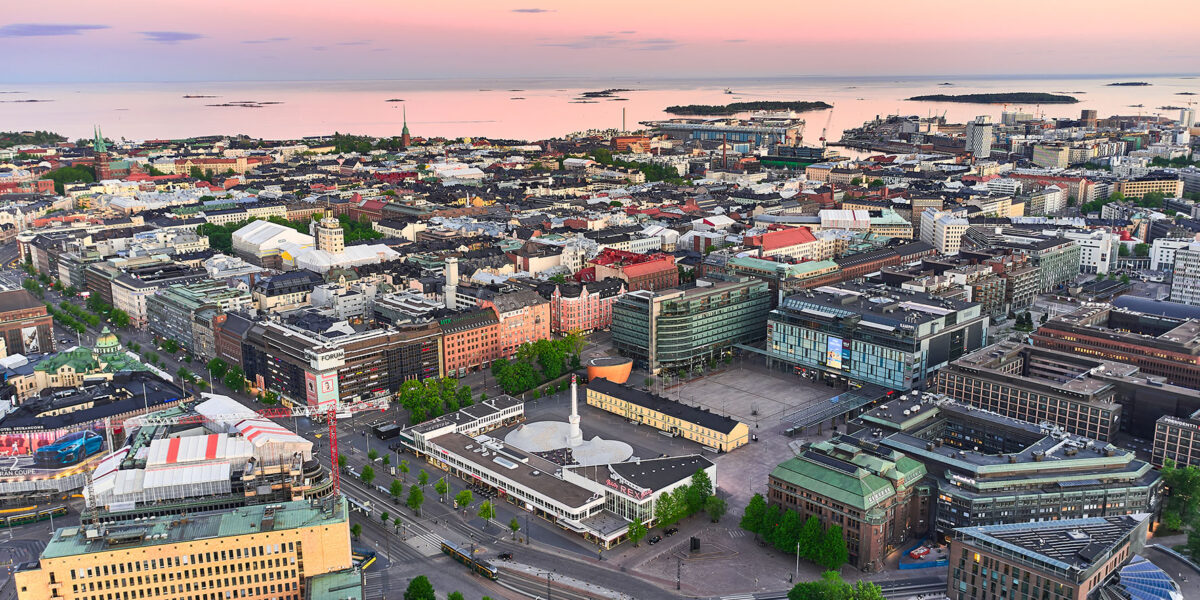
Electricity consumption is growing in all the municipalities of the metropolitan area, placing greater demands on the adequacy of electricity, the transmission capacity, and the voltage support of the electricity network.
Electricity is increasingly needed to electrify ports and transport, to expand metro services, for data centres, and to electrify district heating, such as heat pumps and boilers.
At the same time, the Helsinki metropolitan area is expanding and the population is increasing: new residential areas are increasing the basic load, which means that the need for services and the number of jobs is also increasing. Heating is becoming electrified, and more and more people in the capital have electric cars.
The increase in consumption is reflected not only in the amount of electricity used, but also in the timing of consumption. For example, the charging of electric cars is often concentrated at times of low electricity prices, which increases the instantaneous power demand on the grid.
At the same time, the Helsinki metropolitan area’s own electricity production has fallen sharply. The region used to have significant local electricity and heat generation, but the closure of the coal-fired power plants has removed around 700 MW of electricity and over 1,000 MW of thermal power.
The closure of the coal-fired power plants at Hanasaari and Salmisaari in Helsinki and Suomenoja in Espoo has fundamentally changed energy production.
“In the past, the Helsinki metropolitan area was close to self-sufficiency, but now it is clearly a consumption-weighted region in terms of electricity. The change has been exceptionally rapid,” says Timo Kiiveri, Executive Vice President of Fingrid.
District heating is now increasingly produced by electric boilers, large heat pumps, heat storage systems, and other emission-free solutions. This has increased electricity consumption and the need for transmission, as heat is no longer produced as a by-product of electricity generation as it used to be.
Electricity consumption doubles in Helsinki and Vantaa
Esa Äärynen, Customer Relations Director at Helen Electricity Network Ltd, confirms that electricity consumption in Helsinki has started to grow strongly.
By the end of the decade, electricity consumption is projected to increase to between 1,500 MW and 1,600 MW, double today’s levels.
Of this, 1,400 MW will occur through decisions already taken by customers, and part of the new electricity consumption has been connected to the grid through flexible connection contracts.
“This development is being driven by urban growth, electrification of shipping and heavy transport, expansion of the metro network, data centres, and electrification of district heating, among other things,” Äärynen says.
“The intensity and speed of the clean transition has surprised us all in the metropolitan area.”
Helen has responded to this development by increasing its investments to around €500 million over the next 10 years.
Electricity consumption is also growing exceptionally fast in Vantaa. The electrification of heat production and transport and the phasing out of fossil fuels have created a need for substantial investment.
“The intensity and speed of the clean transition has surprised us all in the metropolitan area,” says Risto Lappi, CEO of Vantaa Energy Electricity Networks Ltd.
In Vantaa, electricity consumption is projected to double in ten years. This growth will require investments of around €250 million, with a particular focus on the 110-kilovolt regional network, which will connect the city’s distribution network to the transmission grid.
As consumption and power peaks increase, the existing 110-kilovolt grid will become a bottleneck for electricity transmission, and new loads, such as data centres or electric vehicle charging infrastructure, cannot be connected to the grid without significant reinforcements.
The network is being built according to forecasts
A key project that will improve the security of supply in Vantaa and the entire Helsinki metropolitan area is the new substation added to Fingrid’s development plan on the border between Vantaa and Tuusula.
“It will strongly guide the construction of the 110-kilovolt network in Vantaa, and it will have a major impact on the region’s electricity supply and security of supply,” Lappi says.
In total, Fingrid has almost €1 billion worth of system reinforcement projects underway in Southern Finland. Key among them are the already-completed Huittinen–Forssa transmission line, the new transformer stations at Hepokorpi in Espoo and transformer expansion in Tammisto in Vantaa, the 400-kilovolt cable connection in Helsinki, and the Lowlands Line, which will bring additional transmission capacity from the west to the capital.
In addition, several projects are investing in grid voltage support.
Kiiveri says that the network will be strengthened as consumption and connections grow in line with forecasts, but not as a front-loaded contingency. Needs arise in stages and are implemented gradually as forecasts can change and needs grow.
“We cannot build transmission capacity just in case, because that would be economically unsustainable. That is why projects are implemented in phases, according to forecasts and orders by distribution system operators and other customers,” he explains.
The transmission grid must favour overhead lines
In a densely built-up urban environment, building an electricity network is a different challenge from that in sparsely populated areas.
In Helsinki, for example, a 400-kilovolt underground cable crosses gas and water pipelines, transport routes, recreational areas and even wartime structures.
“The emphasis is on permits, land use and dialogue with residents. People will naturally react if construction comes close to their living environment, and this has to be taken into account. The amount of dialogue is huge,” says Kiiveri.
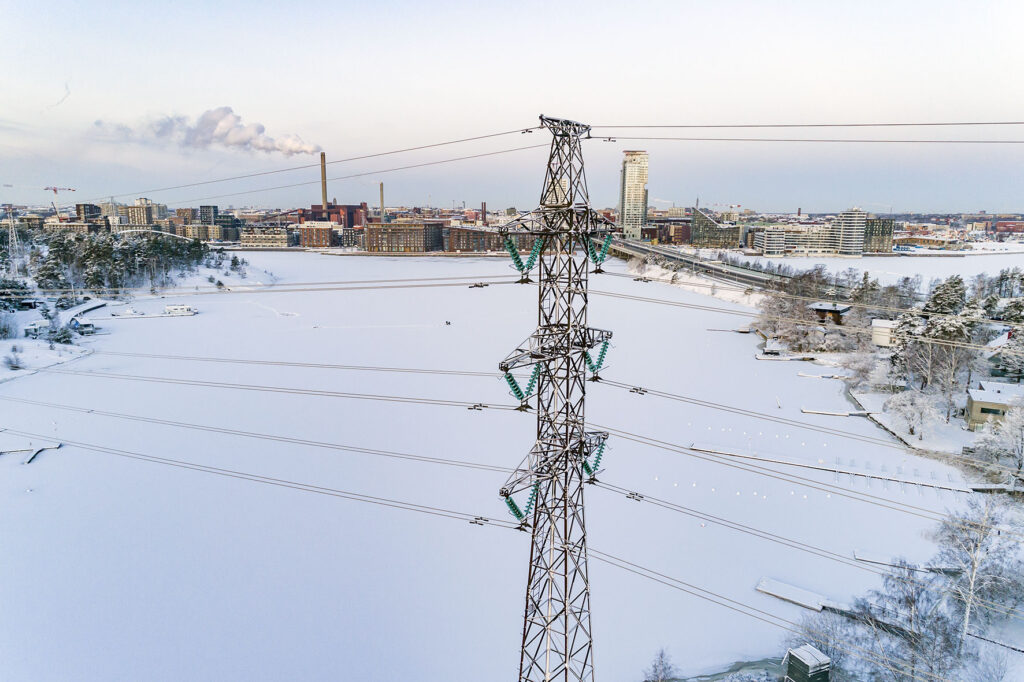
Although people often talk about underground cabling in urban areas, the basic solution for the transmission grid is still the 400-kilovolt overhead line.
“Underground cables are a special solution. They are up to ten times more expensive than overhead lines, with lower transmission capacities and slower fault repairs. From a security of supply perspective, overhead lines are a superior solution,” says Kiiveri.
Overhead lines are also necessary in cities, for example where high transmission capacity is needed. However, for electricity transmission connections in Helsinki, underground cabling is often the only alternative due to the dense urban structure.
300 tonnes of steel on the move
The challenges of building a transmission grid are not limited to line routes: transporting of large electrical transformers requires careful planning. The transport weight of a single transformer is almost 300 tonnes, equivalent to the weight of about seven trams.
Transport is made more difficult by the fact that many of the railways, and especially the railway bridges, are up to 100 years old. The condition and load-bearing capacity of road bridges also limit the routes, which means that long detours have to be found.
“The technical debt in infrastructure is now highly visible in the daily life of the electricity transmission operator. In addition, the changed security situation has created additional challenges in sharing information on critical infrastructure, meaning that we are not getting enough information to plan routes,” says Kiiveri.
Timely information on projects is needed
The Helsinki metropolitan area has established itself as the focus of electricity consumption in Finland, and this trend is only getting stronger.
At present, electricity is mainly imported to the region from the west coast of Finland and Sweden via the Aurora Line, but small-scale nuclear power, for example, could change this and increase the capital’s self-sufficiency of electricity at some point in time.
“It typically takes between seven and eight years to build new parts of the transmission grid.”
Transmission grid projects require long-term planning together with distribution network operators.
“It typically takes between seven and eight years to build new parts of the transmission grid, much longer than building a boiler, for example. Therefore, projects need to be agreed upon and known well in advance,” Kiiveri emphasises.
Lappi also highlights the importance of long term forecasting.
“It is essential for the distribution system operator to know which substation can offer grid capacity in the future. That is why Fingrid’s 10–20 year planning is particularly important for us,” he says.