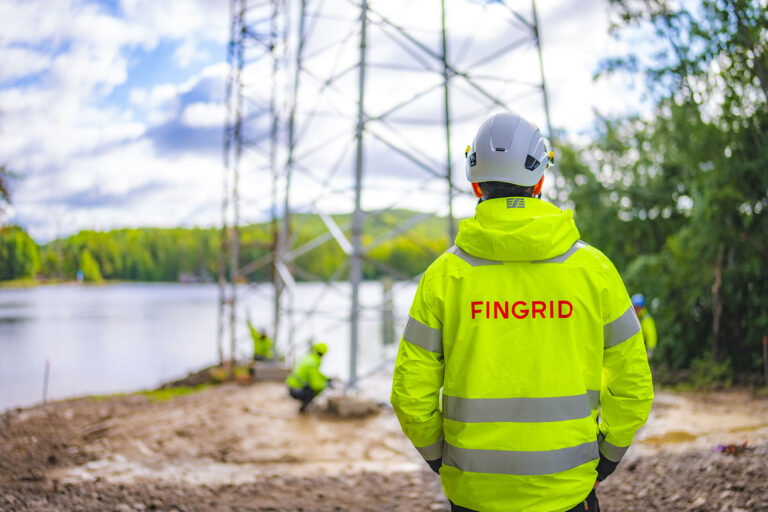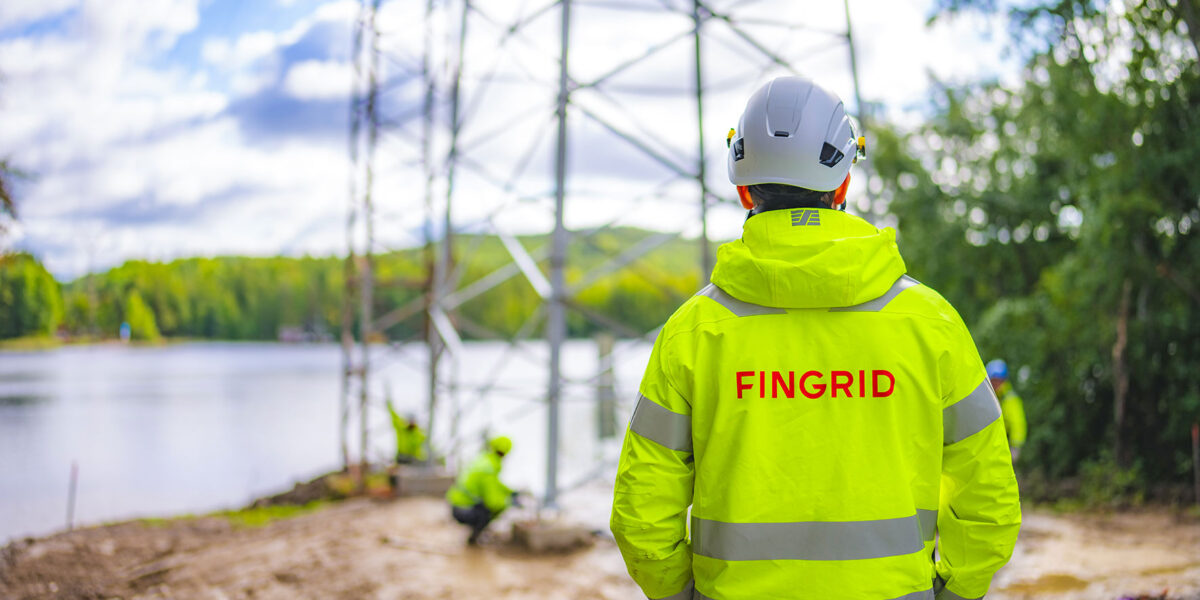
This year, Fingrid’s theme for occupational safety on construction sites is ‘Intervening in unsafe activities is caring’.
“The theme arose due to accidents and near misses in the past year. Particular attention is now being paid to electrical safety and working at height,” says Markku Pöysti, Expert in Occupational Safety at Fingrid.
An activity is unsafe if it could result in injury or cause damage to property, material, the environment or third parties.
“Acting unsafely can be due to ignorance or incompetence. Sometimes it is a lack of attention to instructions and risks, sometimes it is forgetfulness in the rush of daily work,” says Pöysti.
Intervening means caring and wanting to protect your colleague from harm and damage.
When a colleague points out that your harness is not fastened or your safety goggles are missing, it shows that they care. The recipient should understand the value of the feedback and not perceive it as a negative comment.
Intervening means caring and wanting to protect your colleague from harm and damage. Pöysti understands that there is a big threshold to speak up.
“It is largely a question of how to say it constructively. It is important to be calm, create a sense of caring, and make your colleague understand the risks that their actions or omissions may pose to themselves or others.”
Learning opportunities
Eelis Lassi, Site Manager at Enersense PN Oy, says that from the outset of a new project, a safety culture is created on site where anyone can intervene in unsafe activities, whether they are a colleague or a supervisor.
“This culture is created first and foremost through safety toolbox talks, where employees discuss the risks associated with their jobs and think about ways to prevent them.”
When pointing out unsafe behaviour to a colleague, it is important to address the issue in a way that makes the colleague understand that the intervention is directed at the activity, not at the person.
“If the approach is wrong, the situation leaves a bad taste. Unsafe behaviour must be addressed and corrected immediately. When the intervention feels positive, the atmosphere is then open, and the situation becomes a learning experience, not a judgmental one.”
Taking care of safety goes beyond avoiding accidents and injuries.
“Safe operations lay the foundation for a high-quality end result,” says Lassi.