Aluminium, steel, concrete and copper are widely used in the construction of electricity networks, and their manufacture generates large volumes of CO2 emissions. In line with its sustainability objectives, Fingrid is seeking to reduce emissions from both grid construction and other operations.
“We have switched to green aluminium for conductor aluminium, so their manufacture now uses CO2-free electricity. This has cut aluminium-related emissions to just under a third of what they used to be. We’re now turning our attention to concrete, that is, how we can reduce the carbon footprint of the concrete we use,” says Construction Manager Keijo Välimaa from Fingrid.
This can be achieved through the use of low-carbon concrete, which either contains a lower proportion of cement, or some of the cement is replaced by industrial by-products such as fly ash or blast furnace slag.
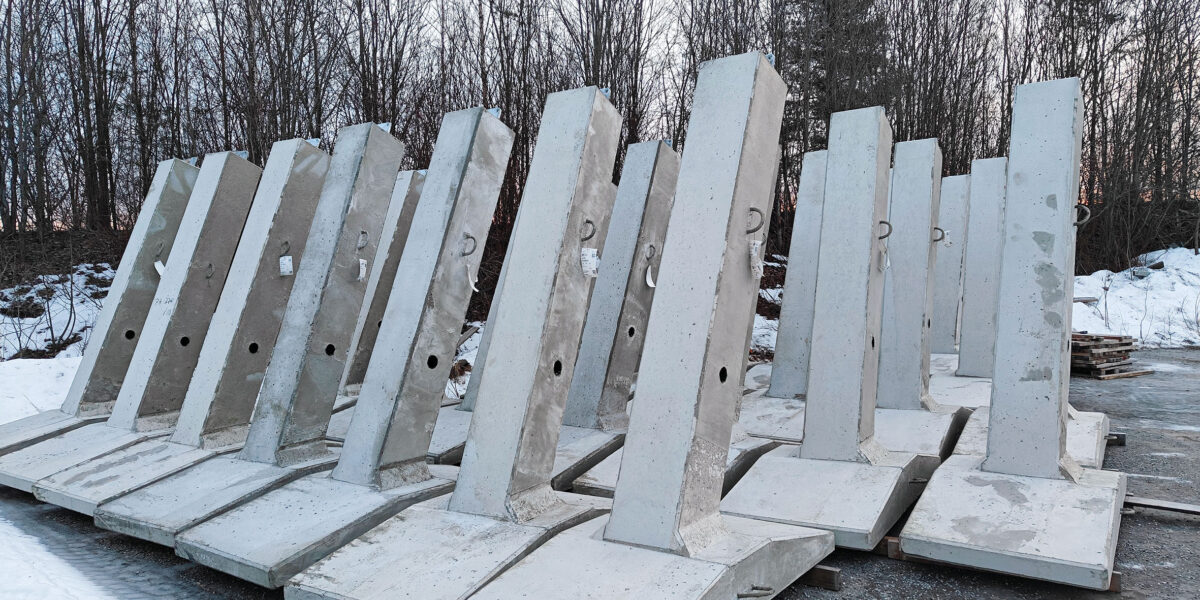
The Herva–Nuojuankangas transmission line in North Ostrobothnia is serving as a pilot project. The transmission line will be 117 kilometres long and the transmission line supports will have a total of about 2,000 foundation elements, half of which will be made of low-carbon concrete.
Requirements met
The foundation elements for the transmission line supports will be manufactured and supplied by Consolis Parma, which has a long history of manufacturing low-carbon concrete elements for building construction.
“The construction of the Herva–Nuojuankangas transmission line is an interesting project for us, and will also open the door to manufacturing new types of infrastructure products,” says Juha Rämö, Technology Director at Consolis Parma.
“The foundation elements will use GWP.85 concrete, which will reduce emissions by about 15 per cent. For the Herva–Nuojuankangas project, this means a reduction of 50,000 kg of carbon dioxide emissions compared to the manufacture of regular concrete.”
Rämö says that low-carbon concrete has the same properties as other types of concrete, so there will be no differences in the final product.
“Low-carbon concrete may strengthen slightly more slowly than regular concrete, but this will have no effect on the product’s final strength. The main point is that the manufacture of the material meets all of the requirements.”
Lessons to be learned
The construction of the Herva–Nuojuankangas transmission line began last year, and is well on its way to its scheduled completion in 2027.
“This project will be a learning curve for us. We’re working to reduce the carbon footprint of foundations, and the elements are the first items to be tested. We will adjust our technical requirements later on the basis of the results,” says Välimaa.
“We appreciate that the manufacturing industry is actively seeking low-carbon alternatives that will reduce CO2-emissions.”