The energy transition is progressing rapidly, making balancing the electricity grid more critical than ever.
As weather-dependent production increases, the ability to store energy and respond quickly to fluctuations in supply and demand will be needed.
The reserve market operated by Fingrid offers an opportunity for this, which is now being exploited by players from completely different backgrounds.
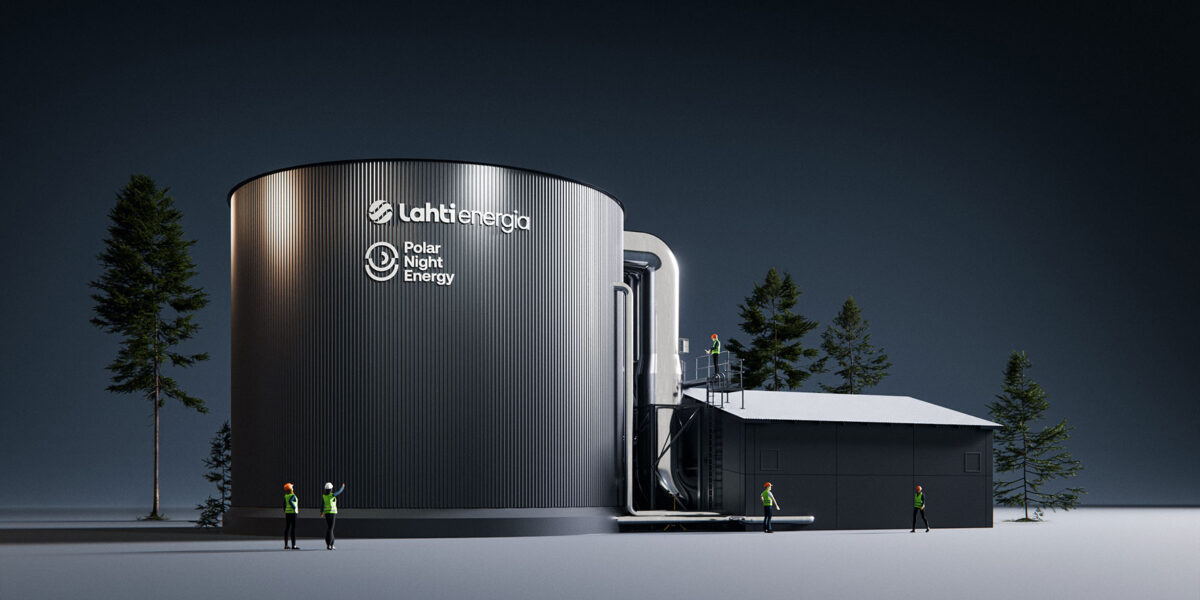
Sand battery brings stability to Vääksy
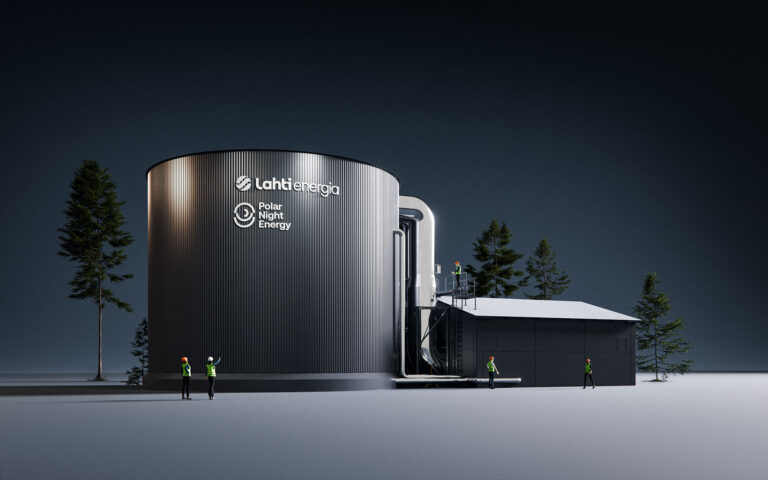
Jouni Haikarainen, CEO of Lahti Energia, sees energy storage as part of a broader shift away from fossil fuels. The 3,000-tonne sand battery being built in the Vääksy district heating network is a concrete example of this.
“We wanted to get rid of fossil natural gas.”
“We wanted to get rid of fossil natural gas. We looked at several options, and the sand battery was the most interesting. Investment subsidies were instrumental when we set out to execute a project with new technology,” says Haikarainen.
Technically, the system has a capacity of 2 MW and a storage capacity of 250 MWh, with electric elements heating air in the pipework. The air then heats the sand up to 600°C.
The system is multi-purpose, as it not only secures the price of district heating, but also opens new doors in the electricity market.
“The sand battery will also allow us to participate in reserve markets that our current solutions for Lahti’s main network are unable to address. There are crucial differences in speed and controllability between the sand battery and a conventional electric boiler.”
For Lahti Energia, reserve trading is handled by an external balance responsible party, which is a typical division of labour in the energy world.
Although the day-to-day operations are in the hands of a partner, the experience with Fingrid has been positive in all respects.
“Every time Lahti Energia has dealt with Fingrid, the service has been professional and good,” says Haikarainen.
As a future development, he envisages a more dynamic reserve market, where bids would not need to be locked in too early, but resources could be offered flexibly, closer to the time of use.
Domestic security of supply and smart data
Where the sand battery shines at the interface between heat and electricity, Enico Oy from Tampere focuses on electrochemical electrical energy storage.
For CEO Marko Lähteenmäki, this is not just about the hardware; it is a seamless combination of technology, automation and data.
“Storage is part of the energy megatrend.”
“Storage is part of the energy megatrend. In the past, flexibility was provided by large industrial loads, but now new solutions are needed,” he says.
For Enico, using products made in Finland is a value choice linked to the national security of supply. The physical security of equipment connected to energy networks and the management of data are as important today as the protection of information networks.
“We do not run batteries down blindly. Instead, our software optimises the output and the service life of the battery. By having all components and automation under one roof, we avoid building different interfaces, which is often a challenge in international projects,” says Lähteenmäki.
Finland is an excellent pilot platform for the storage systems offered by Enico. Lähteenmäki acknowledges Fingrid’s role in this ecosystem in particular.
“We are fortunate in the sense that Fingrid is a customer-oriented limited company, not a rigid government agency. They have a genuine interest in helping different parties to succeed. Even though the organisation is large and reserves are stretched, they are proactive.”