Electricity market
Affordable and ecological solar energy
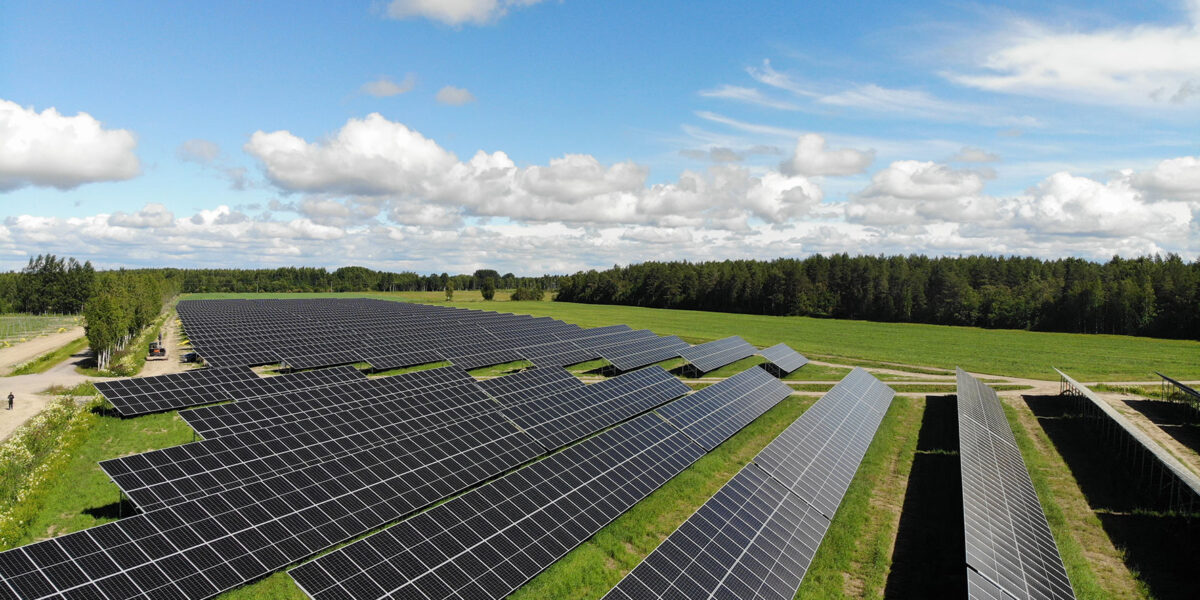
Solar power is a cheap, renewable and emission-free energy source, and the construction of a solar power plant is fast. Producers appreciate Fingrid’s willingness
to work with them.

Solar power is a cheap, renewable and emission-free energy source, and the construction of a solar power plant is fast. Producers appreciate Fingrid’s willingness
to work with them.

Experts believe that technological advances and a strong electricity grid will pave the way for new solar power projects in Finland. At present, Finland’s largest solar power plants are fairly small by international comparison, mainly consisting of projects constructed to meet the needs of specific properties or companies.

Connecting renewable forms of energy to the grid involves challenges that Fingrid tackles with R&D projects. New solutions are used to ensure the security of the energy supply and cost-effectiveness during the global energy revolution.

Tourism company Hullu Poro is introducing a virtual power plant service in Kittilä to enable connections to reserve markets, which balance out electricity generation and consumption. The Aurora Pyramids suites have recently been connected to the service. The solution helps support sustainable development, but the company also benefits financially.

The writer is a non-fiction author and inventor who does a lot of teaching and expert work in the energy industry. Janne Käpylehto has also worked with mathematical software at NASA. Janne likes to sail his floating sauna to Tallinn in the summer and make ice carousels in the winter.

The increase in renewable energy and the connection of wind and solar power to the grid have raised discussion about the concept of inertia. Fingrid’s Senior Expert Minna Laasonen explains what’s going on.

Solar power is completely emission-free electricity, which means that using it reduces carbon dioxide emissions. Providing the chance to charge an electric car encourages cleaner transport. Fingrid now has both.

Finland is also beginning to notice the benefit of electric transport.
More accurate device and load-specific consumption profiles and different types of open data will make it possible to optimise dimensioning of the existing energy system in the most economically feasible manner. The starting points for utilising open data in the energy market are very attractive, as nearly all customers have electricity meters that can be read in real time.

The house of Kaija Niskala, Service Manager for energy accounting and guarantees of origin, sports solar panels on its roof, producing electricity not only for her family but also for others.